



Arbitration and the Courts: A Comparative Analysis of Principles, Procedures, and Legal Effects
By Wanitcha Sumanat, Arbitrator at the Ministry of Justice, Thailand
30 December 2025, Bangkok – Dispute resolution mechanisms play a vital role in protecting the rights and interests of parties in contemporary legal systems, particularly in the context of international business and commercial disputes. Among the most widely used mechanisms are arbitration and litigation before the courts of justice. These two processes differ significantly in terms of access principles, party consent, procedural structure, and the legal effects of decisions.
This article aims to provide a comparative analysis of arbitration and court litigation, focusing on key dimensions such as party consent, efficiency, flexibility, privacy, and institutional suitability in a business context.
Access to the Adjudicative Process
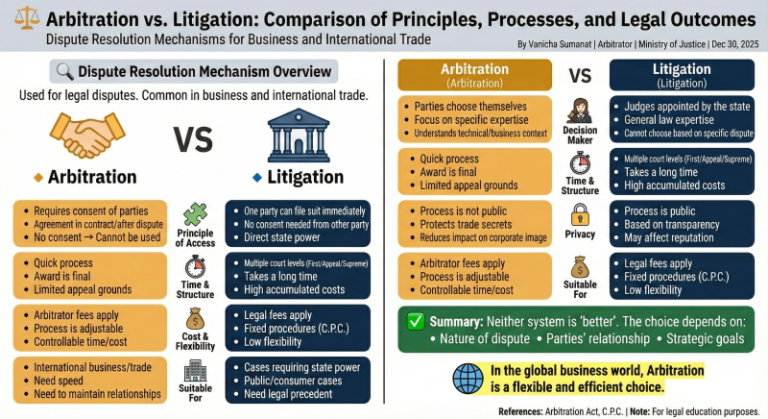
The most fundamental distinction between arbitration and court litigation lies in the principle of party consent. Arbitration can take place only when both parties have mutually agreed to submit their dispute to arbitration, either through a pre-dispute arbitration clause in a contract or through a post-dispute submission agreement. Such consent constitutes the structural foundation that gives arbitration its binding legal effect.
In contrast, courts of justice are state institutions exercising sovereign authority. Either party may unilaterally initiate proceedings by filing a claim, without requiring the prior consent of the opposing party. This reflects the judiciary’s role as a public mechanism for resolving disputes and safeguarding citizens’ rights.
Decision-Makers in Dispute Resolution
In arbitration, parties enjoy considerable autonomy in selecting their arbitrators. Arbitrators are often chosen for their subject-matter expertise, such as in commercial law, construction, energy, or international finance. This technical specialization enhances the quality and contextual understanding of arbitral awards.
By contrast, judges in the court system are appointed by the state and assigned according to institutional rules. While judges possess broad legal expertise, parties generally cannot select a judge whose background precisely matches the technical nature of a specific dispute to the same extent as in arbitration.
Duration and Procedural Structure
Arbitration is commonly associated with procedural efficiency and finality. Arbitral awards are binding and generally not subject to appeal on the merits, except in narrowly defined circumstances such as serious procedural irregularities.
Court litigation, on the other hand, is typically structured in multiple tiers, including courts of first instance, appellate courts, and courts of last resort. Although this layered system strengthens legal safeguards and correctness, it often results in prolonged proceedings and higher cumulative costs.
Privacy and Disclosure
Arbitration proceedings are conducted under the principle of confidentiality. Hearings and arbitral awards are not public unless the parties agree otherwise. This characteristic makes arbitration particularly suitable for commercial disputes involving trade secrets or corporate reputation.
Conversely, court proceedings are generally public in accordance with the principle of transparency. Hearings and judgments are accessible to the public, which may have reputational or relational consequences for the parties involved.
Costs and Procedural Flexibility
While arbitration entails arbitrators’ fees and administrative costs, the process is highly flexible. Parties can tailor procedures to suit the nature of the dispute, streamline timelines, and manage costs more effectively.
Court litigation follows strict procedural laws. Although this ensures standardization and equality before the law, it limits flexibility and often leads to accumulated costs over extended periods.
Institutional Advantages of Arbitration
Arbitration has gained widespread acceptance in the business sector because it helps preserve commercial relationships, reduces adversarial confrontation, and allows parties to actively shape the dispute resolution process. Moreover, arbitral awards are internationally enforceable in numerous jurisdictions under the global framework governing the recognition and enforcement of foreign arbitral awards.
Conclusion
Both arbitration and court litigation play indispensable roles within the legal system. The choice between them depends on the nature of the dispute, the relationship between the parties, and the strategic objectives of dispute resolution. In the context of international trade and commerce, arbitration offers an efficient, flexible, and business-oriented alternative that aligns well with the needs of private actors in an increasingly globalized world.
References
Born, G. B. (2021). International commercial arbitration (3rd ed.). Kluwer Law International.
Redfern, A., & Hunter, M. (2015). Law and practice of international commercial arbitration (6th ed.). Oxford University Press.
United Nations Commission on International Trade Law. (1958). Convention on the Recognition and Enforcement of Foreign Arbitral Awards (New York Convention). United Nations.
About Certified Translators, Translation Certifiers, and Certified Interpreters of SEAProTI
The Southeast Asian Association of Professional Translators and Interpreters (SEAProTI) has formally announced the qualifications and requirements for registration of Certified Translators, Translation Certification Providers, and Certified Interpreters in Sections 9 and 10 of the Royal Gazette, published by the Secretariat of the Cabinet, Office of the Prime Minister of Thailand, on 25 July 2024 (Vol. 141, Part 66 Ng, p. 100). Certified Translators, Translation Certification Providers, and Certified Interpreters
The Council of State has proposed the enactment of a Royal Decree, granting registered translators and recognised translation certifiers from professional associations or accredited language institutions the authority to provide legally valid translation certification (Letter to SEAProTI dated April 28, 2025)
SEAProTI is the first professional association in Thailand and Southeast Asia to implement a comprehensive certification system for translators, certifiers, and interpreters.
Head Office: Baan Ratchakru Building, No. 33, Room 402, Soi Phahonyothin 5, Phahonyothin Road, Phaya Thai District, Bangkok 10400, Thailand
Email: hello@seaproti.com | Tel.: (+66) 2-114-3128 (Office hours: Mon–Fri, 09:00–17:00)
อนุญาโตตุลาการและศาลยุติธรรม: การวิเคราะห์เชิงเปรียบเทียบด้านหลักการ กระบวนการ และผลทางกฎหมาย
บทความโดย วณิชชา สุมานัส อนุญาโตตุลาการ สังกัดกระทรวงยุติธรรม ประเทศไทย
30 ธันวาคม 2568, กรุงเทพมหานคร – กระบวนการระงับข้อพิพาทเป็นกลไกสำคัญในการคุ้มครองสิทธิและประโยชน์ของคู่กรณีในสังคมกฎหมายร่วมสมัย โดยเฉพาะในบริบทของข้อพิพาททางธุรกิจและพาณิชยกรรมระหว่างประเทศ กลไกหลักที่ใช้กันอย่างแพร่หลาย ได้แก่ กระบวนการอนุญาโตตุลาการ และ กระบวนการพิจารณาคดีในศาลยุติธรรม ซึ่งมีความแตกต่างกันอย่างมีนัยสำคัญทั้งในด้านหลักการเข้าถึง ความยินยอมของคู่กรณี โครงสร้างกระบวนการ และผลทางกฎหมายของคำวินิจฉัย
บทความนี้มีวัตถุประสงค์เพื่อวิเคราะห์เปรียบเทียบอนุญาโตตุลาการกับศาลยุติธรรม โดยเน้นประเด็นสำคัญ ได้แก่ ความยินยอมของคู่กรณี ความรวดเร็ว ความยืดหยุ่น ความเป็นส่วนตัว และความเหมาะสมเชิงสถาบันในบริบททางธุรกิจ
หลักการเข้าถึงกระบวนการพิจารณา
ความแตกต่างพื้นฐานที่สุดระหว่างอนุญาโตตุลาการและศาลยุติธรรม คือ หลักความยินยอมของคู่กรณี อนุญาโตตุลาการสามารถเกิดขึ้นได้ก็ต่อเมื่อคู่กรณีได้ตกลงยินยอมร่วมกัน ไม่ว่าจะเป็นการตกลงล่วงหน้าไว้ในสัญญา (arbitration clause) หรือการตกลงหลังจากเกิดข้อพิพาทแล้ว (submission agreement) ความยินยอมดังกล่าวเป็นเงื่อนไขเชิงโครงสร้างที่ทำให้กระบวนการอนุญาโตตุลาการมีผลผูกพันตามกฎหมาย
ในทางตรงกันข้าม ศาลยุติธรรมเป็นกลไกของรัฐที่เปิดให้คู่กรณีฝ่ายใดฝ่ายหนึ่งสามารถยื่นฟ้องได้โดยลำพัง โดยไม่จำเป็นต้องได้รับความยินยอมจากอีกฝ่ายหนึ่งก่อน หลักการนี้สะท้อนบทบาทของศาลในฐานะสถาบันใช้อำนาจอธิปไตยเพื่อระงับข้อพิพาทและคุ้มครองสิทธิของประชาชน
ผู้ทำหน้าที่ตัดสินข้อพิพาท
ในกระบวนการอนุญาโตตุลาการ คู่กรณีมีอิสระในการเลือกอนุญาโตตุลาการ ซึ่งมักเป็นผู้เชี่ยวชาญเฉพาะด้าน เช่น กฎหมายการค้า การก่อสร้าง พลังงาน หรือการเงินระหว่างประเทศ ความเชี่ยวชาญเฉพาะด้านนี้ช่วยเพิ่มคุณภาพและความเข้าใจเชิงเทคนิคของคำชี้ขาด
ในขณะที่ศาลยุติธรรม ผู้พิพากษาได้รับการแต่งตั้งโดยรัฐตามระบบศาล แม้จะมีความเชี่ยวชาญด้านกฎหมายโดยทั่วไป แต่ไม่อาจเลือกผู้พิพากษาให้ตรงกับลักษณะเฉพาะของข้อพิพาทได้ในระดับเดียวกับอนุญาโตตุลาการ
ระยะเวลาและโครงสร้างของกระบวนการ
อนุญาโตตุลาการมีลักษณะเด่นด้าน ความรวดเร็วและความสิ้นสุดของกระบวนการ โดยทั่วไปคำชี้ขาดของอนุญาโตตุลาการมีผลผูกพันและไม่เปิดช่องให้อุทธรณ์ในเนื้อหาข้อพิพาท เว้นแต่ในกรณีจำกัดตามที่กฎหมายกำหนด เช่น ความไม่ชอบด้วยกระบวนการ
ตรงกันข้าม กระบวนการพิจารณาคดีในศาลยุติธรรมมีโครงสร้างหลายชั้น ได้แก่ ศาลชั้นต้น ศาลอุทธรณ์ และศาลฎีกา ซึ่งแม้จะเพิ่มหลักประกันด้านความถูกต้องตามกฎหมาย แต่ก็ส่งผลให้กระบวนการใช้เวลายาวนานและมีต้นทุนสูงขึ้น
ความเป็นส่วนตัวและการเปิดเผยข้อมูล
กระบวนการอนุญาโตตุลาการดำเนินไปภายใต้หลักความเป็นส่วนตัว การพิจารณาและคำชี้ขาดไม่เปิดเผยต่อสาธารณะ เว้นแต่คู่กรณีจะตกลงเป็นอย่างอื่น ลักษณะนี้เหมาะสมอย่างยิ่งสำหรับข้อพิพาททางธุรกิจที่เกี่ยวข้องกับความลับทางการค้า หรือภาพลักษณ์ขององค์กร
ในทางกลับกัน การพิจารณาคดีในศาลยุติธรรมเป็นกระบวนการสาธารณะตามหลักความโปร่งใส การไต่สวนและคำพิพากษาสามารถเข้าถึงได้โดยสาธารณชน ซึ่งอาจส่งผลกระทบต่อชื่อเสียงหรือความสัมพันธ์ทางธุรกิจของคู่กรณี
ค่าใช้จ่ายและความยืดหยุ่นของขั้นตอน
แม้อนุญาโตตุลาการอาจมีค่าใช้จ่ายด้านค่าตอบแทนอนุญาโตตุลาการ แต่โดยรวมแล้วกระบวนการมีความยืดหยุ่น สามารถออกแบบขั้นตอนให้เหมาะสมกับลักษณะข้อพิพาท ลดระยะเวลา และควบคุมต้นทุนได้ดีกว่า
ในขณะที่ศาลยุติธรรมดำเนินกระบวนการตามกฎหมายวิธีพิจารณาคดีอย่างเคร่งครัด ซึ่งแม้จะสร้างความเป็นมาตรฐานและความเสมอภาค แต่ก็จำกัดความยืดหยุ่นและมักก่อให้เกิดค่าใช้จ่ายสะสมในระยะยาว
ข้อดีเชิงสถาบันของอนุญาโตตุลาการ
อนุญาโตตุลาการได้รับความนิยมอย่างแพร่หลายในภาคธุรกิจ เนื่องจากช่วยรักษาความสัมพันธ์ระหว่างคู่สัญญา ลดลักษณะการเผชิญหน้า และเปิดโอกาสให้คู่กรณีมีส่วนร่วมในการออกแบบกระบวนการยุติข้อพิพาท นอกจากนี้ คำชี้ขาดของอนุญาโตตุลาการยังมีผลผูกพันและสามารถบังคับได้ในหลายประเทศทั่วโลกภายใต้กรอบกฎหมายระหว่างประเทศว่าด้วยการรับรองและบังคับคำชี้ขาด
บทสรุป
ทั้งอนุญาโตตุลาการและศาลยุติธรรมต่างมีบทบาทสำคัญในระบบกฎหมาย การเลือกใช้กลไกใดขึ้นอยู่กับลักษณะข้อพิพาท ความสัมพันธ์ของคู่กรณี และวัตถุประสงค์เชิงกลยุทธ์ของการระงับข้อพิพาท โดยเฉพาะในบริบททางธุรกิจและการค้าระหว่างประเทศ อนุญาโตตุลาการถือเป็นทางเลือกที่มีประสิทธิภาพ ยืดหยุ่น และสอดคล้องกับความต้องการของภาคเอกชนในโลกยุคโลกาภิวัตน์
เอกสารอ้างอิง
- Born, G. B. (2021). International commercial arbitration (3rd ed.). Kluwer Law International.
- Redfern, A., & Hunter, M. (2015). Law and practice of international commercial arbitration (6th ed.). Oxford University Press.
- United Nations Commission on International Trade Law. (1958). Convention on the recognition and enforcement of foreign arbitral awards (New York Convention). United Nations.
เกี่ยวกับนักแปลรับรอง ผู้รับรองการแปล และล่ามรับรองของสมาคมวิชาชีพนักแปลและล่ามแห่งเอเชียตะวันออกเฉียงใต้
สมาคมวิชาชีพนักแปลและล่ามแห่งเอเชียตะวันออกเฉียงใต้ (SEAProTI) ได้ประกาศหลักเกณฑ์และคุณสมบัติผู้ที่ขึ้นทะเบียนเป็น “นักแปลรับรอง (Certified Translators) และผู้รับรองการแปล (Translation Certification Providers) และล่ามรับรอง (Certified Interpreters)” ของสมาคม หมวดที่ 9 และหมวดที่ 10 ในราชกิจจานุเบกษา ของสำนักเลขาธิการคณะรัฐมนตรี ในสำนักนายกรัฐมนตรี แห่งราชอาณาจักรไทย ลงวันที่ 25 ก.ค. 2567 เล่มที่ 141 ตอนที่ 66 ง หน้า 100 อ่านฉบับเต็มได้ที่: นักแปลรับรอง ผู้รับรองการแปล และล่ามรับรอง
สำนักคณะกรรมการกฤษฎีกา เสนอให้ตราเป็นพระราชกฤษฎีกา โดยกำหนดให้นักแปลที่ขึ้นทะเบียน รวมถึงผู้รับรองการแปลจากสมาคมวิชาชีพหรือสถาบันสอนภาษาที่มีการอบรมและขึ้นทะเบียน สามารถรับรองคำแปลได้ (จดหมายถึงสมาคม SEAProTI ลงวันที่ 28 เม.ย. 2568)
สมาคมวิชาชีพนักแปลและล่ามแห่งเอเชียตะวันออกเฉียงใต้ เป็นสมาคมวิชาชีพแห่งแรกและแห่งเดียวในประเทศไทยและภูมิภาคเอเชียตะวันออกเฉียงใต้ที่มีระบบรับรองนักแปลรับรอง ผู้รับรองการแปล และล่ามรับรอง
สำนักงานใหญ่: อาคารบ้านราชครู เลขที่ 33 ห้อง 402 ซอยพหลโยธิน 5 ถนนพหลโยธิน แขวงพญาไท เขตพญาไท กรุงเทพมหานคร 10400 ประเทศไทย
อีเมล: hello@seaproti.com โทรศัพท์: (+66) 2-114-3128 (เวลาทำการ: วันจันทร์–วันศุกร์ เวลา 09.00–17.00 น.