



Behind the Negotiated Resolution of the Akara Gold-Mine Dispute:
Reframing “Section 44” as a Structural Turning Point Toward Singapore-Seated Arbitration
Author: Wanitcha Sumanat — Arbitrator affiliated with the Ministry of Justice (Thailand); Mediator affiliated with the Ministry of Justice (Thailand), the Royal Thai Police, and the Ministry of Defence (Thailand)
21 February 2026, Bangkok — This article advances an analytical framework arguing that the conflict surrounding the Akara gold mine (the Chatree mining project) should not be understood merely as a domestic dispute over resource governance or environmental regulation. Rather, it evolved into an international investment dispute under the Thailand–Australia Free Trade Agreement (TAFTA) and entered arbitration proceedings pursuant to the UNCITRAL Rules, with the Permanent Court of Arbitration (PCA) acting as registry and Singapore designated as the seat of arbitration (italaw, n.d.; UNCTAD, n.d.). The core narrative frequently circulating in public discourse—namely, that the dispute was triggered by a “misunderstanding” of Section 44—should be reinterpreted here as a systemic misconception concerning the relationship between extraordinary domestic executive authority under Thailand’s 2014 Interim Constitution and the state-responsibility and investor-protection standards embedded in investment treaties. The analysis suggests that, while extraordinary powers may reduce administrative friction in the short term, they can increase long-term dispute risk by “relocating the forum” from domestic mechanisms of review to international venues characterized by higher transaction costs and deeper policy externalities. Accordingly, this article concludes that risk mitigation in future high-stakes regulatory controversies should emphasize predictable, reviewable, and proportionate regulatory design, rather than relying on assumptions that extraordinary domestic authority can insulate the state from exposure under international investment law.
Introduction: From Regulatory Controversy to International Investment Dispute
The Akara gold-mine dispute has often been cited as a paradigmatic illustration of tension between public policy objectives, particularly environmental and public-health concerns, and the investment-protection architecture of investor–state dispute settlement (ISDS). Under ISDS frameworks, foreign investors may pursue arbitration in accordance with dispute-resolution clauses contained in free-trade agreements or investment treaties (DFAT, n.d.). A defining feature of investment disputes is that the analytical center of gravity rarely remains confined to the question of whether a state possesses regulatory authority. Instead, it shifts to whether the exercise of that authority is sufficiently predictable, reasoned, proportionate, and consistent with procedural fairness. Where state measures are perceived as “intensive” or as deviating from ordinary regulatory practice, the probability of allegations framed in treaty-standard terms tends to rise, even when the state articulates a plausible public-interest justification.
Section 44 and the “Misunderstanding” Thesis as a Systemic Misconception
Section 44 of the 2014 Interim Constitution of Thailand empowered the Head of the National Council for Peace and Order (NCPO) to issue orders to “suspend, suppress, or prevent” circumstances deemed to affect public order or national security, while simultaneously providing that such orders would be deemed lawful, constitutional, and final within the domestic legal order (International Commission of Jurists, 2014). From the standpoint of constitutional politics and public law, this structure projects decisiveness and speed, and it is sometimes interpreted to imply that “finality” domestically diminishes the state’s legal exposure more generally. That assumption becomes unstable, however, once the frame of analysis shifts from domestic public law to international investment law. ISDS tribunals assess the responsibility of the state as a subject of international legal obligation under treaty commitments; they are not bound by the domestic device of making an order “final” in the internal legal system.
In this sense, the widely repeated claim of a “misunderstanding of Section 44” is better conceptualized as a systemic misconception. It reflects a belief that domestic legal insulation or decisive executive finality can be translated into insulation at the international level. In practice, the use of extraordinary authority can function as an accelerant that pushes disputes toward the treaty forum, particularly where the counterparty evaluates domestic decision-making as offering limited space for ordinary review, contestation, or remedial engagement.
NCPO Order No. 72/2559: From Regulatory Intervention to a “Risk Signal” in Investment Governance
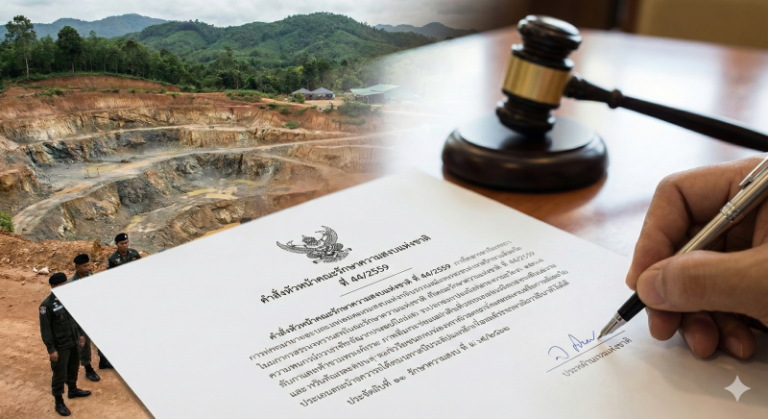
NCPO Order No. 72/2559, issued pursuant to Section 44, addressed the perceived impacts of gold-mining operations by suspending authorizations for exploration and mining of gold, suspending renewals of concessions and licenses, and directing relevant operators to suspend operations from 1 January 2017 unless and until competent committees decided otherwise (NCPO Order No. 72/2559, 2016). Thai public media reporting at the time similarly characterized the measure as a “no-renewal” policy coupled with a mandated operational suspension beginning on 1 January 2017, framed as a strong intervention to address mining impacts (Thai PBS, 2016).
From the perspective of investment-law risk analysis, extraordinary measures of this kind may operate as a signal of regulatory unpredictability. The concern is not that a state lacks the sovereign capacity to regulate for public purposes, but that the modality and process of regulation—particularly when it bypasses ordinary administrative pathways—may be argued to disrupt legitimate expectations or to raise questions under treaty standards relating to procedural fairness, proportionality, or consistency. Consequently, the legal contest becomes less about the abstract legitimacy of public-interest regulation and more about how the state structured, justified, and implemented the measure in a way that remains intelligible and defensible in an international adjudicatory setting.
Singapore as the Seat: Forum Relocation and Its Effects on Negotiation Dynamics
Publicly recognized investment-dispute databases identify Kingsgate Consolidated Ltd. v. Thailand as a TAFTA-based arbitration proceeding under the UNCITRAL Rules, registered as PCA Case No. 2017-36/AA684, and recorded as having been resolved by settlement (italaw, n.d.; UNCTAD, n.d.). Once a dispute enters international arbitration, the “cost of uncertainty” increases structurally, encompassing legal expenditure, time horizons, institutional resource burdens on the state, and reputational risk affecting investment governance and regulatory credibility.
A further layer of significance concerns the legal meaning of the “seat” of arbitration. The seat is not merely a physical venue for hearings; it is the juridical anchor that connects key aspects of arbitral procedure to the law of the seat, including potential court supervision in set-aside proceedings should an award be rendered. Accordingly, designating Singapore—widely regarded as a prominent arbitration hub in the region—may intensify strategic incentives on both sides to pursue an exit that limits long-term externalities, rather than risk an award that could reverberate through future policy space and serve as a reference point in subsequent disputes.
Termination Without an Award: Risk Management Beyond Win–Loss Framing
Public statements by counsel associated with the state side have indicated that, on 27 November 2025, Kingsgate announced an agreement to resolve the investment-treaty arbitration “without the issuance of an award,” followed by steps implementing that resolution (Arnold & Porter, 2026). International business reporting on the same date likewise described movement toward ending the TAFTA arbitration (Mining Weekly, 2025). Thai news sources in early 2026 reported that the investor withdrew the claim unconditionally and that the tribunal issued an order terminating the proceedings, emphasizing that Thailand was not required to pay the compensation previously sought (The Nation Thailand, 2026; Thairath, 2026).
In academic terms, a termination without an award is often interpreted as a mechanism for containing precedent-like effects. It reduces the probability that a tribunal’s reasoning will crystallize into an award that may constrain regulatory design ex ante or be cited—formally or informally—in later disputes. It also narrows the scope of public articulation of sensitive factual and policy determinations. On this reading, “negotiation” in high-stakes investment disputes should not be reduced to political compromise alone; it is frequently a structured exercise in legal and policy risk management under international constraints.
Conclusion: Separating Domestic Insulation from International State Responsibility
The Akara dispute illustrates that an extraordinary domestic device for rendering an order “final” does not render the dispute final in international investment law. On the contrary, extraordinary measures may catalyze forum relocation into ISDS where the counterparty perceives heightened unpredictability or insufficient procedural safeguards. Under this framework, the “Section 44 misunderstanding” should be reformulated as a misconception about the architecture of state responsibility: the domestic legal status of an order does not, by itself, resolve questions of treaty compliance.
The principal policy implication is that preventing recurrence should focus on regulatory measures that are predictable, reviewable, and proportionate, accompanied by credible avenues for remedy and policy communication that international actors can recognize as procedurally robust. In the long run, investor confidence and the sustainability of public-interest regulation will be assessed within a broader evaluative frame than domestic legality alone.
References
- Arnold & Porter. (2026, January 9). Arnold & Porter secures the resolution of an investment treaty arbitration brought by Kingsgate against the Kingdom of Thailand.
- Department of Foreign Affairs and Trade (DFAT). (n.d.). Investor–state dispute settlement (ISDS).
- International Commission of Jurists. (2014). Interim Constitution of Thailand: Articles 44–48 (extract).
- italaw. (n.d.). Kingsgate Consolidated Ltd. v. Thailand, PCA Case No. 2017-36/AA684.
- Mining Weekly. (2025, November 27). Kingsgate, Thailand move to end long-running Tafta arbitration.
- Thai PBS. (2016, December 13). เปิดคำสั่งหัวหน้า คสช. 72/2559 “ยาแรง” แก้ปัญหาเหมืองแร่ทองคำ.
- Thairath. (2026). Kingsgate withdraws arbitration request, ending 8-year dispute without compensation from Thailand (English edition).
- The Nation Thailand. (2026). Kingsgate drops lawsuit unconditionally, ending 8-year Akara gold mine dispute.
- United Nations Conference on Trade and Development (UNCTAD). (n.d.). Kingsgate v. Thailand (investment dispute settlement case profile).
- หัวหน้าคณะรักษาความสงบแห่งชาติ. (2016, 13 ธันวาคม). คำสั่งหัวหน้าคณะรักษาความสงบแห่งชาติ ที่ 72/2559 เรื่อง การแก้ไขปัญหาผลกระทบจากการประกอบกิจการเหมืองแร่ทองคำ. ราชกิจจานุเบกษา.
This section provides information about certified translators, translation certifiers, and certified interpreters associated with SEAProTI.
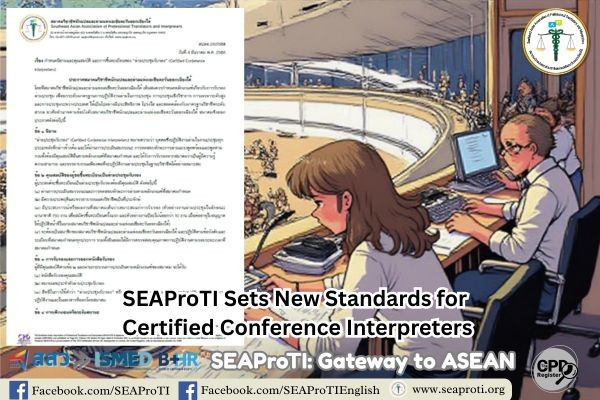
The Southeast Asian Association of Professional Translators and Interpreters (SEAProTI) has officially shared the qualifications and requirements for becoming Certified Translators, Translation Certification Providers, and Certified Interpreters in Sections 9 and 10 of the Royal Gazette, which was published by the Prime Minister’s Office in Thailand on July 25, 2024. Certified Translators, Translation Certification Providers, and Certified Interpreters
The Council of State has proposed the enactment of a Royal Decree, granting registered translators and recognised translation certifiers from professional associations or accredited language institutions the authority to provide legally valid translation certification (Letter to SEAProTI dated April 28, 2025)
SEAProTI is the first professional association in Thailand and Southeast Asia to implement a comprehensive certification system for translators, certifiers, and interpreters.
Head Office: Baan Ratchakru Building, No. 33, Room 402, Soi Phahonyothin 5, Phahonyothin Road, Phaya Thai District, Bangkok 10400, Thailand
Email: hello@seaproti.com | Tel.: (+66) 2-114-3128 (Office hours: Mon–Fri, 09:00–17:00)
เบื้องหลังการเจรจาข้อพิพาทเหมืองทองอัครา: การทำความเข้าใจ “ม.44” ในฐานะจุดเปลี่ยนเชิงโครงสร้างสู่อนุญาโตตุลาการที่นั่งสิงคโปร์
ผู้แต่ง วณิชชา สุมานัส อนุญาโตตุลาการ สังกัดกระทรวงยุติธรรม, ผู้ไกล่เกลี่ย สังกัดกระทรวงยุติธรรม และสำนักงานตำรวจแห่งชาติ และกระทรวงกลาโหม
21 กุมภาพันธ์ 2569, กรุงเทพมหานคร – บทความนี้เสนอกรอบวิเคราะห์ว่าความขัดแย้งเกี่ยวกับเหมืองทองคำอัครา (โครงการเหมืองชาตรี) มิได้เป็นเพียงข้อพิพาทด้านการกำกับดูแลทรัพยากรหรือสิ่งแวดล้อมภายในประเทศ หากแต่พัฒนาเป็นข้อพิพาทการลงทุนระหว่างประเทศภายใต้ความตกลงการค้าเสรีไทย–ออสเตรเลีย (TAFTA) จนเข้าสู่กระบวนการอนุญาโตตุลาการตามกติกา UNCITRAL โดยมี PCA เป็นหน่วยงานทะเบียน และมีที่นั่งอนุญาโตตุลาการที่สิงคโปร์ (italaw, n.d.; UNCTAD, n.d.). แก่นข้อถกเถียงที่มักถูกสื่อสารในเชิงสาธารณะว่าเป็น “ความเข้าใจผิดเรื่อง ม.44” ถูกอธิบายในที่นี้ในฐานะความเข้าใจคลาดเคลื่อนเชิงระบบเกี่ยวกับความสัมพันธ์ระหว่างอำนาจพิเศษตามรัฐธรรมนูญชั่วคราว พ.ศ. 2557 กับหลักความรับผิดของรัฐและมาตรฐานการคุ้มครองนักลงทุนภายใต้สนธิสัญญาการลงทุน ผลการวิเคราะห์ชี้ว่า การใช้อำนาจพิเศษอาจลดแรงเสียดทานเชิงบริหารในระยะสั้น แต่กลับเพิ่มความเสี่ยงด้านข้อพิพาทในระยะยาวผ่าน “การย้ายสนาม” จากกลไกตรวจสอบภายในประเทศไปสู่เวทีระหว่างประเทศที่มีต้นทุนสูงและมีผลสะเทือนเชิงนโยบายมากกว่า ทั้งนี้ บทความสรุปเชิงนโยบายว่า การลดความเสี่ยงในอนาคตควรเน้นการออกแบบมาตรการกำกับดูแลที่คาดหมายได้ ตรวจสอบได้ และได้สัดส่วน มากกว่าการยึดถือสมมติฐานว่า “อำนาจพิเศษ” จะทำให้รัฐพ้นจากความเสี่ยงในระบบกฎหมายระหว่างประเทศ
บทนำ: จากข้อพิพาทเชิงกำกับดูแลสู่ข้อพิพาทการลงทุนระหว่างประเทศ
ข้อพิพาทเหมืองทองอัคราถูกยกเป็นตัวอย่างเด่นของความตึงเครียดระหว่างนโยบายสาธารณะด้านสิ่งแวดล้อมและสุขภาพ กับกลไกคุ้มครองการลงทุนภายใต้กรอบ ISDS ซึ่งเปิดช่องให้นักลงทุนต่างชาติยื่นข้อพิพาทต่อคณะอนุญาโตตุลาการระหว่างประเทศตามบทบัญญัติในความตกลงการค้าเสรีหรือสนธิสัญญาการลงทุน (DFAT, n.d.). ลักษณะเฉพาะของข้อพิพาทการลงทุนคือศูนย์ถ่วงของคดีมักไม่หยุดอยู่ที่คำถามว่ารัฐ “มีอำนาจกำกับ” หรือไม่ หากแต่เคลื่อนไปสู่คำถามว่าการใช้อำนาจนั้นมีความคาดหมายได้ มีเหตุผลรองรับ มีความได้สัดส่วน และเคารพกระบวนการที่เป็นธรรมหรือไม่ เมื่อมาตรการรัฐถูกมองว่า “เข้มข้น” หรือ “ผิดธรรมเนียมการกำกับ” ความเสี่ยงที่จะถูกตีความเป็นการละเมิดมาตรฐานการคุ้มครองนักลงทุนย่อมเพิ่มขึ้น แม้รัฐจะอธิบายเป้าหมายด้านสาธารณะได้ก็ตาม
มาตรา 44 และ “ความเข้าใจผิด” ในฐานะความเข้าใจคลาดเคลื่อนเชิงระบบ
มาตรา 44 ของรัฐธรรมนูญแห่งราชอาณาจักรไทย (ฉบับชั่วคราว) พ.ศ. 2557 ให้อำนาจหัวหน้า คสช. ออกคำสั่งเพื่อ “ระงับ ยับยั้ง หรือปราบปราม” ปัญหาที่กระทบความสงบเรียบร้อยหรือความมั่นคง โดยคำสั่งดังกล่าว “ให้ถือว่าชอบด้วยกฎหมาย ชอบด้วยรัฐธรรมนูญ และเป็นที่สุด” ในระบบภายใน (International Commission of Jurists, 2014). ในเชิงรัฐศาสตร์กฎหมาย อำนาจลักษณะนี้สร้างภาพของ “ความเด็ดขาดและจบไว” และอาจถูกทำความเข้าใจต่อว่าเมื่อคำสั่งถูกทำให้ “เป็นที่สุด” แล้ว ความเสี่ยงทางกฎหมายของรัฐย่อมลดลง อย่างไรก็ตาม สมมติฐานดังกล่าวคลาดเคลื่อนเมื่อขยับจากโลกของกฎหมายมหาชนภายในประเทศไปสู่โลกของกฎหมายระหว่างประเทศด้านการลงทุน เพราะระบบ ISDS พิจารณาความรับผิดของ “รัฐ” ตามพันธกรณีในความตกลง มิได้ถูกจำกัดด้วยกลไกการทำให้คำสั่งเป็นที่สุดในประเทศ
ดังนั้น คำว่า “ความเข้าใจผิดเรื่อง ม.44” จึงควรถูกอ่านว่าเป็นความเข้าใจผิดเชิงระบบ กล่าวคือเข้าใจว่าเกราะคุ้มกันหรือความเด็ดขาดในประเทศสามารถแปลงเป็นเกราะคุ้มกันในระดับระหว่างประเทศได้ ทั้งที่ในความเป็นจริง การใช้อำนาจพิเศษอาจกลายเป็นปัจจัยเร่งให้ข้อพิพาทถูกยกระดับเข้าสู่สนธิสัญญาการลงทุนมากขึ้น โดยเฉพาะเมื่อคู่กรณีประเมินว่ากระบวนการตัดสินใจภายในประเทศไม่เปิดพื้นที่ต่อการตรวจสอบและการเยียวยาอย่างที่คาดหมายในสภาวะปกติ
คำสั่งหัวหน้า คสช. ที่ 72/2559: จุดเปลี่ยนจากมาตรการกำกับสู่ “สัญญาณความเสี่ยง” ในสายตาการลงทุน
คำสั่งหัวหน้า คสช. ที่ 72/2559 ซึ่งอาศัยอำนาจตามมาตรา 44 มีสาระสำคัญเกี่ยวกับการระงับการอนุญาตสำรวจและทำเหมืองแร่ทองคำ การระงับการต่ออายุประทานบัตรและใบอนุญาต และกำหนดให้ผู้ประกอบการที่เกี่ยวข้อง “ระงับการประกอบกิจการไว้ตั้งแต่วันที่ 1 มกราคม 2560 เป็นต้นไป” จนกว่าคณะกรรมการที่เกี่ยวข้องจะมีมติเป็นอย่างอื่น (คำสั่งหัวหน้า คสช. ที่ 72/2559, 2559). การประกาศของสื่อสาธารณะไทยในช่วงเวลานั้นอธิบายตรงกันว่าคำสั่งดังกล่าวเป็นมาตรการ “ห้ามต่ออายุ” และ “ให้ระงับกิจการตั้งแต่ 1 ม.ค. 2560” เพื่อจัดการผลกระทบจากเหมืองแร่ทองคำ (Thai PBS, 2016).
ในแง่วิเคราะห์เชิงกฎหมายการลงทุน การใช้อำนาจพิเศษเช่นนี้สามารถทำหน้าที่เป็น “สัญญาณความไม่คาดหมายได้” ของการกำกับดูแล (regulatory unpredictability) เพราะรูปแบบการตัดสินใจที่ตัดตอนกระบวนการปกติในประเทศอาจถูกหยิบไปตีความในกรอบข้อกล่าวหาเรื่องมาตรฐานการปฏิบัติของรัฐ ไม่ว่าจะเป็นความเป็นธรรมเชิงกระบวนการ ความได้สัดส่วน หรือความสม่ำเสมอของนโยบาย ทั้งนี้ ประเด็นไม่ได้อยู่ที่รัฐไม่อาจกำกับดูแลเพื่อสาธารณะ หากแต่อยู่ที่ “รูปแบบและกระบวนการ” ของการกำกับนั้นถูกมองได้ว่ากระทบความคาดหมายอันชอบด้วยเหตุผลของผู้ลงทุนมากเพียงใด
สิงคโปร์ในฐานะ “ที่นั่งอนุญาโตฯ”: นัยยะของการย้ายสนามและผลต่อพลวัตการเจรจา
ข้อมูลสาธารณะที่เป็นที่ยอมรับในระดับฐานข้อมูลข้อพิพาทการลงทุนระบุว่า Kingsgate Consolidated Ltd. v. Thailand เป็นคดีภายใต้ TAFTA ใช้กติกา UNCITRAL และมี PCA Case No. 2017-36/AA684 โดยมีผลลัพธ์เป็นการยุติข้อพิพาทด้วยการตกลงกัน (settled) (italaw, n.d.; UNCTAD, n.d.). การที่ข้อพิพาทเข้าสู่กระบวนการอนุญาโตตุลาการระหว่างประเทศทำให้ “ต้นทุนของความไม่แน่นอน” เพิ่มขึ้นโดยโครงสร้าง ไม่ว่าจะเป็นต้นทุนการดำเนินคดี ระยะเวลา ภาระทรัพยากรของรัฐ และความเสี่ยงด้านชื่อเสียงเชิงนโยบายการลงทุน
นัยยะสำคัญอีกชั้นหนึ่งคือ “ที่นั่งอนุญาโตฯ” มิใช่เพียงสถานที่จัดการประชุม แต่เป็นศูนย์กลางเชิงกฎหมายที่ผูกกระบวนการไว้กับกฎหมายของรัฐที่เป็นที่นั่งในประเด็นบางด้านของการกำกับกระบวนพิจารณาและการแทรกแซงของศาลในกรณีเพิกถอนคำชี้ขาด หากมีคำชี้ขาดเกิดขึ้น ด้วยเหตุนี้ การมีที่นั่งที่สิงคโปร์ซึ่งเป็นศูนย์กลางอนุญาโตฯ ที่ได้รับความเชื่อมั่นสูงในภูมิภาค จึงยิ่งทำให้แรงจูงใจเชิงยุทธศาสตร์ของรัฐและนักลงทุนโน้มไปสู่ “การยุติข้อพิพาทที่ควบคุมผลกระทบได้” มากกว่าการเสี่ยงให้เกิดคำชี้ขาดที่อาจสร้างบรรทัดฐานต่ออนาคต
การยุติข้อพิพาทโดยไม่มีคำชี้ขาด: การจัดการความเสี่ยงมากกว่าตรรกะแพ้–ชนะ
เอกสารสาธารณะจากฝ่ายที่ปรึกษากฎหมายของรัฐระบุว่าเมื่อวันที่ 27 พฤศจิกายน 2025 Kingsgate ได้ประกาศว่าได้ตกลงยุติอนุญาโตตุลาการ “โดยไม่มีการออกคำชี้ขาด” และต่อมามีการดำเนินการตามข้อตกลงนั้น (Arnold & Porter, 2026). ข่าวธุรกิจระหว่างประเทศในวันเดียวกันรายงานทิศทางเดียวกันว่าทั้งสองฝ่ายขยับไปสู่การยุติอนุญาโตฯ ภายใต้ TAFTA (Mining Weekly, 2025). ขณะเดียวกัน แหล่งข่าวไทยในช่วงต้นปี 2026 สื่อสารว่าฝ่ายผู้ลงทุน “ถอนคำร้องโดยไม่มีเงื่อนไข” และคณะอนุญาโตฯ มีคำสั่งยุติกระบวนการอย่างเป็นทางการ โดยเน้นว่าไทยไม่ต้องชดใช้ตามที่เคยถูกเรียกร้อง (The Nation Thailand, 2026; Thairath, 2026).
ในเชิงวิชาการ ผลลัพธ์แบบ “ยุติโดยไม่มีคำชี้ขาด” มักถูกตีความว่าเป็นกลไกปิดความเสี่ยงเชิงบรรทัดฐาน กล่าวคือช่วยลดโอกาสเกิดเหตุผลในคำชี้ขาดที่อาจถูกนำไปอ้างอิงในข้อพิพาทอื่น ลดความเสี่ยงที่จะเกิดผลสะเทือนต่อการกำกับดูแลในอนาคต และช่วยให้รัฐคงพื้นที่ทางนโยบายมากกว่าเมื่อเทียบกับสถานการณ์ที่มีคำชี้ขาดอย่างเป็นทางการ นัยยะดังกล่าวอธิบายได้ว่าทำไม “การเจรจา” ในคดีลักษณะนี้จึงมิใช่เพียงการหาข้อยุติทางการเมือง แต่เป็นการบริหารความเสี่ยงทางกฎหมายและความเสี่ยงเชิงนโยบายในกรอบระหว่างประเทศ
บทสรุป: “ม.44” กับบทเรียนเรื่องการแยกเกราะภายในออกจากความรับผิดระหว่างประเทศของรัฐ
ข้อพิพาทเหมืองทองอัคราแสดงให้เห็นชัดว่าอำนาจพิเศษที่ทำให้คำสั่งภายในประเทศ “เป็นที่สุด” ไม่ได้ทำให้ข้อพิพาท “เป็นที่สุด” ในระบบกฎหมายระหว่างประเทศด้านการลงทุน ตรงกันข้าม อำนาจพิเศษอาจทำหน้าที่เป็นตัวเร่งให้ข้อพิพาทย้ายสนามไปสู่ ISDS หากคู่กรณีประเมินว่าการกำกับดูแลไม่คาดหมายได้หรือขาดความคุ้มครองเชิงกระบวนการที่เพียงพอ ภายใต้กรอบนี้ “ความเข้าใจผิดเรื่อง ม.44” จึงควรได้รับการตีความใหม่ว่าเป็นความเข้าใจผิดเกี่ยวกับโครงสร้างความรับผิดของรัฐ ไม่ใช่เพียงความเข้าใจผิดเชิงเทคนิคกฎหมายไทย
นัยเชิงนโยบายที่สำคัญคือการลดความเสี่ยงข้อพิพาทในอนาคตควรมุ่งไปที่การออกแบบมาตรการกำกับดูแลที่ให้เหตุผลได้ ตรวจสอบได้ และได้สัดส่วน พร้อมมีช่องทางเยียวยาและการสื่อสารเชิงนโยบายที่คาดหมายได้ มากกว่าการพึ่งพาเครื่องมือ “ตัดตอน” ด้วยอำนาจพิเศษ ทั้งนี้ เพราะในท้ายที่สุด ความเชื่อมั่นของนักลงทุนและความสามารถของรัฐในการดำเนินนโยบายสาธารณะอย่างยั่งยืนจะถูกประเมินในกรอบที่กว้างกว่ากฎหมายภายในประเทศเสมอ
เอกสารอ้างอิง
- Arnold & Porter. (2026, January 9). Arnold & Porter secures the resolution of an investment treaty arbitration brought by Kingsgate against the Kingdom of Thailand.
- Department of Foreign Affairs and Trade (DFAT). (n.d.). Investor-state dispute settlement (ISDS).
- International Commission of Jurists. (2014). Interim Constitution of Thailand: Articles 44–48 (extract).
- italaw. (n.d.). Kingsgate Consolidated Ltd. v. Thailand, PCA Case No. 2017-36/AA684.
- Mining Weekly. (2025, November 27). Kingsgate, Thailand move to end long-running Tafta arbitration.
- Thai PBS. (2016, December 13). เปิดคำสั่งหัวหน้า คสช. 72/2559 “ยาแรง” แก้ปัญหาเหมืองแร่ทองคำ.
- Thairath. (2026). Kingsgate withdraws arbitration request, ending 8-year dispute without compensation from Thailand (English edition).
- The Nation Thailand. (2026). “Kingsgate” drops lawsuit unconditionally, ending 8-year Akara gold mine dispute.
- United Nations Conference on Trade and Development (UNCTAD). (n.d.). Kingsgate v. Thailand (investment dispute settlement case profile).
- คำสั่งหัวหน้าคณะรักษาความสงบแห่งชาติ ที่ 72/2559 เรื่อง การแก้ไขปัญหาผลกระทบจากการประกอบกิจการเหมืองแร่ทองคำ. (2559, 13 ธันวาคม). ราชกิจจานุเบกษา.
สมาคมวิชาชีพนักแปลและล่ามแห่งเอเชียตะวันออกเฉียงใต้ (SEAProTI) ได้ประกาศหลักเกณฑ์และคุณสมบัติของผู้ที่ขึ้นทะเบียนเป็น “นักแปลรับรอง (Certified Translators) และผู้รับรองการแปล (Translation Certification Providers) และล่ามรับรอง (Certified Interpreters)” ของสมาคม หมวดที่ 9 และหมวดที่ 10 ในราชกิจจานุเบกษา ของสำนักเลขาธิการคณะรัฐมนตรี ในสำนักนายกรัฐมนตรี แห่งราชอาณาจักรไทย ลงวันที่ 25 ก.ค. 2567 เล่มที่ 141 ตอนที่ 66 ง หน้า 100 อ่านฉบับเต็มได้ที่: นักแปลรับรอง ผู้รับรองการแปล และล่ามรับรอง
สำนักคณะกรรมการกฤษฎีกาเสนอให้ตราเป็นพระราชกฤษฎีกา โดยกำหนดให้นักแปลที่ขึ้นทะเบียน รวมถึงผู้รับรองการแปลจากสมาคมวิชาชีพหรือสถาบันสอนภาษาที่มีการอบรมและขึ้นทะเบียน สามารถรับรองคำแปลได้ (จดหมายถึงสมาคม SEAProTI ลงวันที่ 28 เม.ย. 2568)
สมาคมวิชาชีพนักแปลและล่ามแห่งเอเชียตะวันออกเฉียงใต้เป็นสมาคมวิชาชีพแห่งแรกและแห่งเดียวในประเทศไทยและภูมิภาคเอเชียตะวันออกเฉียงใต้ที่มีระบบรับรองนักแปลรับรอง ผู้รับรองการแปล และล่ามรับรอง
สำนักงานใหญ่: อาคารบ้านราชครู เลขที่ 33 ห้อง 402 ซอยพหลโยธิน 5 ถนนพหลโยธิน แขวงพญาไท เขตพญาไท กรุงเทพมหานคร 10400 ประเทศไทย
อีเมล: hello@seaproti.com โทรศัพท์: (+66) 2-114-3128 (เวลาทำการ: วันจันทร์–วันศุกร์ เวลา 09.00–17.00 น.