


Artificial Intelligence and Dubbing: Opportunities, Limitations, and the Role of Humans in Contemporary Audiovisual Translation
4 January 2026, Bangkok—The rapid development of Artificial Intelligence (AI) has had a significant impact on the language industry, particularly in the field of Audiovisual Translation (AVT). Toward the end of 2025, AI dubbing has attracted increasing attention from streaming platforms and digital content providers. This article aims to examine the potential and limitations of AI dubbing in terms of speed, audience reach, and process efficiency, while also discussing theoretical issues surrounding audiovisual translation as a multimodal process that continues to require human intervention in order to maintain quality, naturalness, and the illusion of originalness.
Keywords: AI dubbing, audiovisual translation, artificial intelligence, streaming, multimodality
Introduction
The language industry is among the sectors most rapidly and continuously affected by AI, particularly translation and interpreting, which have traditionally relied heavily on human expertise. In the context of film and television, global streaming platforms were among the first to adopt AI in production workflows, both in subtitling and dubbing. The expansion of AI dubbing is driven in part by time pressure, budget constraints, and the demand for rapid access to cross-border markets.
However, the key question is not whether AI can perform dubbing, but rather how well it performs when measured against established AVT standards.
Advantages of AI Dubbing
Speed and efficiency
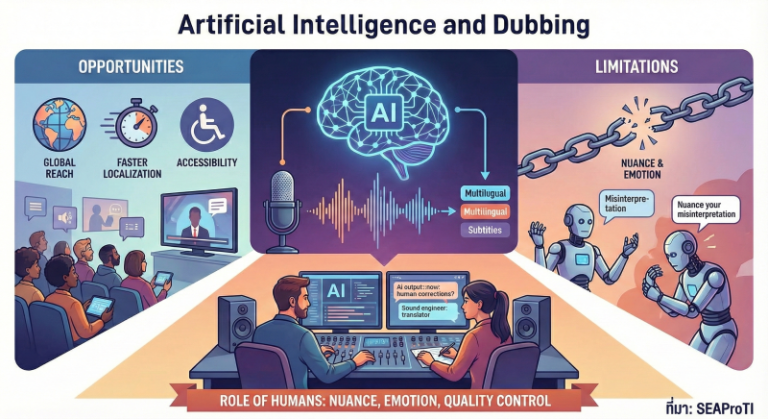
The most evident advantage of AI dubbing lies in its speed. Processes that once required several weeks or even months can now be completed within hours or days. This capability is particularly crucial in the context of simultaneous global releases, where time-to-market can determine commercial success.
Increased accessibility and audience engagement
AI enables older content, or programs that were never dubbed in the past, to reach new audiences at a significantly lower cost. As a result, content providers can experiment with new language markets without the level of financial commitment traditionally required for human dubbing.
Workflow optimization
Traditional dubbing involves multiple stages, including script translation, adaptation, casting voice actors, recording, and quality control. AI dubbing reduces the complexity of certain stages and allows for greater flexibility in workflow management, contributing to shorter turnaround times.
Theoretical and Practical Limitations of AI Dubbing
Despite its technical advantages, AI dubbing faces fundamental structural limitations. Audiovisual translation is not merely the transfer of linguistic content; it involves the coordination of multiple semiotic codes, including language, intonation, rhythm, visuals, gestures, and cultural context (Chaume, 2012).
AI continues to struggle with the nuanced expression of emotions, humor, wordplay, and culturally embedded references. In addition, issues related to lip synchronization and vocal naturalness often make viewers consciously aware that they are watching adapted content rather than experiencing it as seamless.
Crucially, AI has yet to achieve the illusion of originality, which lies at the heart of high-quality dubbing—namely, the ability to make viewers forget that the film or series has undergone any form of translation or adaptation.
The Role of Humans in the Age of AI
From a professional perspective, AI dubbing should be viewed as a tool rather than a replacement. Human practitioners continue to play an essential role as meaning negotiators, quality controllers, and ethical agents responsible for the cultural and social implications of translated content.
A hybrid approach that combines AI technology with AVT expertise may represent the most viable medium-term solution. In such a model, AI accelerates technical processes, while humans remain responsible for discursive, cultural, and interpretive decision-making.
Conclusion
AI dubbing offers new opportunities for the audiovisual industry in terms of speed, accessibility, and market expansion. Nevertheless, its limitations in naturalness, emotional depth, and cultural sensitivity indicate that it cannot yet fully replace human dubbing. Future research and development should therefore focus on designing systems that enable responsible and sustainable collaboration between humans and AI.
References
- Chaume, F. (2012). Audiovisual translation: Dubbing. Manchester, UK: St. Jerome Publishing.
- Díaz Cintas, J., & Remael, A. (2021). Subtitling: Concepts and practices (2nd ed.). London, UK: Routledge. https://doi.org/10.4324/9781003003437
- O’Hagan, M. (2019). The impact of AI on audiovisual translation. Journal of Audiovisual Translation, 2(2), 1–13.
- Pym, A. (2023). Translation technology and human agency. Translation Studies, 16(1), 1–15. https://doi.org/10.1080/14781700.2022.2147050
About Certified Translators, Translation Certifiers, and Certified Interpreters of SEAProTI
The Southeast Asian Association of Professional Translators and Interpreters (SEAProTI) has formally announced the qualifications and requirements for registration of Certified Translators, Translation Certification Providers, and Certified Interpreters in Sections 9 and 10 of the Royal Gazette, published by the Secretariat of the Cabinet, Office of the Prime Minister of Thailand, on 25 July 2024 (Vol. 141, Part 66 Ng, p. 100). Certified Translators, Translation Certification Providers, and Certified Interpreters
The Council of State has proposed the enactment of a Royal Decree, granting registered translators and recognised translation certifiers from professional associations or accredited language institutions the authority to provide legally valid translation certification (Letter to SEAProTI dated April 28, 2025)
SEAProTI is the first professional association in Thailand and Southeast Asia to implement a comprehensive certification system for translators, certifiers, and interpreters.
Head Office: Baan Ratchakru Building, No. 33, Room 402, Soi Phahonyothin 5, Phahonyothin Road, Phaya Thai District, Bangkok 10400, Thailand
Email: hello@seaproti.com | Tel.: (+66) 2-114-3128 (Office hours: Mon–Fri, 09:00–17:00)
ปัญญาประดิษฐ์กับการพากย์เสียง: โอกาส ข้อจำกัด และบทบาทของมนุษย์ในงานแปลโสตทัศน์ร่วมสมัย
4 มกราคม 2569, กรุงเทพมหานคร – การพัฒนาอย่างรวดเร็วของปัญญาประดิษฐ์ (Artificial Intelligence: AI) ได้ส่งผลกระทบอย่างมีนัยสำคัญต่ออุตสาหกรรมภาษา โดยเฉพาะงานแปลโสตทัศน์ (Audiovisual Translation: AVT) ในช่วงปลายปี ค.ศ. 2025 การพากย์เสียงด้วย AI (AI dubbing) ได้รับความสนใจเพิ่มขึ้นอย่างมากจากแพลตฟอร์มสตรีมมิงและผู้ให้บริการเนื้อหาดิจิทัล บทความนี้มีวัตถุประสงค์เพื่อวิเคราะห์ศักยภาพและข้อจำกัดของ AI dubbing ในมิติของความรวดเร็ว การเข้าถึงผู้ชม และประสิทธิภาพเชิงกระบวนการ พร้อมทั้งอภิปรายประเด็นเชิงทฤษฎีเกี่ยวกับการแปลโสตทัศน์ในฐานะกระบวนการหลายรหัส (multimodal process) ที่ยังต้องอาศัยการแทรกแซงของมนุษย์เพื่อรักษาคุณภาพ ความเป็นธรรมชาติ และผลลวงเชิงการรับรู้ (illusion of originalness)
คำสำคัญ: การพากย์เสียงด้วย AI, การแปลโสตทัศน์, ปัญญาประดิษฐ์, สตรีมมิง, ทฤษฎีหลายรหัส
บทนำ
อุตสาหกรรมภาษาเป็นหนึ่งในภาคส่วนที่ได้รับผลกระทบจาก AI อย่างรวดเร็วและต่อเนื่อง โดยเฉพาะงานแปลและล่ามที่เคยพึ่งพาทักษะมนุษย์เป็นหลัก ในบริบทของสื่อภาพยนตร์และโทรทัศน์ แพลตฟอร์มสตรีมมิงระดับโลกเป็นกลุ่มแรกที่นำ AI มาใช้ในกระบวนการผลิต ทั้งในงานบรรยายใต้ภาพและการพากย์เสียง การขยายตัวของ AI dubbing ส่วนหนึ่งเกิดจากแรงกดดันด้านเวลา งบประมาณ และความต้องการเข้าถึงตลาดข้ามพรมแดนอย่างรวดเร็ว
อย่างไรก็ตาม คำถามสำคัญไม่ได้อยู่ที่ว่า “AI ทำได้หรือไม่” แต่คือ “AI ทำได้ดีเพียงใดเมื่อเทียบกับมาตรฐานของ AVT”
ข้อได้เปรียบของการพากย์เสียงด้วย AI
ความรวดเร็วและประสิทธิภาพ
ข้อได้เปรียบที่เด่นชัดที่สุดของ AI dubbing คือความเร็ว กระบวนการที่เคยใช้เวลาหลายสัปดาห์หรือหลายเดือนสามารถย่นเหลือเพียงไม่กี่วันหรือไม่กี่ชั่วโมง ความสามารถนี้มีความสำคัญอย่างยิ่งในบริบทของการเปิดตัวเนื้อหาพร้อมกันหลายประเทศ (simultaneous global release)
การเพิ่มการเข้าถึงและการมีส่วนร่วมของผู้ชม
AI ทำให้เนื้อหาเก่า หรือรายการที่ไม่เคยถูกพากย์ในอดีต สามารถเข้าถึงผู้ชมกลุ่มใหม่ได้โดยใช้ต้นทุนต่ำลง ส่งผลให้ผู้ให้บริการสามารถทดลองตลาดภาษาใหม่ ๆ ได้โดยไม่ต้องลงทุนสูงเท่าการพากย์แบบดั้งเดิม
การปรับปรุงกระบวนการทำงาน
การพากย์เสียงแบบดั้งเดิมเป็นกระบวนการหลายขั้นตอน ตั้งแต่การแปลบท การปรับบท การคัดเลือกนักพากย์ การบันทึกเสียง และการตรวจคุณภาพ AI dubbing ช่วยลดความซับซ้อนของกระบวนการบางส่วน และทำให้การจัดการเวิร์กโฟลว์มีความยืดหยุ่นมากขึ้น
ข้อจำกัดเชิงทฤษฎีและเชิงปฏิบัติของ AI Dubbing
แม้จะมีข้อได้เปรียบเชิงเทคนิค การพากย์เสียงด้วย AI ยังเผชิญข้อจำกัดเชิงโครงสร้างที่สำคัญ เนื่องจาก AVT ไม่ใช่เพียงการถ่ายทอดภาษา แต่เป็นการประสานกันของหลายรหัส ได้แก่ ภาษา น้ำเสียง จังหวะ ภาพ ท่าทาง และบริบททางวัฒนธรรม (Chaume, 2012)
AI ยังคงประสบปัญหาในการถ่ายทอดอารมณ์อย่างละเอียด การจัดการอารมณ์ขัน มุกตลก หรือการอ้างอิงทางวัฒนธรรม นอกจากนี้ ความไม่สอดคล้องด้าน lip sync และความเป็นธรรมชาติของเสียงยังทำให้ผู้ชม “รับรู้” ได้ว่ากำลังรับชมเนื้อหาที่ผ่านการดัดแปลง
ประเด็นสำคัญคือ AI ยังไม่สามารถสร้าง “ผลลวงแห่งความเป็นต้นฉบับ” (illusory effect) ซึ่งเป็นหัวใจของการพากย์เสียงคุณภาพสูง กล่าวคือ การทำให้ผู้ชมลืมไปว่าภาพยนตร์หรือซีรีส์นั้นเคยถูกแปลหรือพากย์มาก่อน
บทบาทของมนุษย์ในยุค AI
จากมุมมองเชิงวิชาชีพ AI dubbing ควรถูกมองเป็นเครื่องมือ (tool) มากกว่าตัวแทน (replacement) มนุษย์ยังคงมีบทบาทสำคัญในฐานะผู้ตัดสินใจเชิงความหมาย ผู้ตรวจคุณภาพ และผู้รับผิดชอบต่อผลกระทบทางวัฒนธรรมและจริยธรรมของงานแปล
การผสมผสานระหว่าง AI และผู้เชี่ยวชาญด้าน AVT อาจเป็นแนวทางที่เหมาะสมที่สุดในระยะกลาง โดยให้ AI ทำหน้าที่เร่งกระบวนการเชิงเทคนิค ขณะที่มนุษย์รับผิดชอบการตัดสินใจเชิงวาทกรรมและเชิงวัฒนธรรม
สรุป
AI dubbing เปิดโอกาสใหม่ให้กับอุตสาหกรรมโสตทัศน์ในด้านความเร็ว การเข้าถึง และการขยายตลาด อย่างไรก็ตาม ข้อจำกัดด้านความเป็นธรรมชาติ ความละเอียดเชิงอารมณ์ และบริบททางวัฒนธรรมชี้ให้เห็นว่า AI ยังไม่สามารถทดแทนการพากย์เสียงโดยมนุษย์ได้อย่างสมบูรณ์ ในอนาคต งานวิจัยและการพัฒนาควรมุ่งเน้นไปที่การออกแบบระบบที่ให้มนุษย์และ AI ทำงานร่วมกันอย่างมีความรับผิดชอบและยั่งยืน
เอกสารอ้างอิง
- Chaume, F. (2012). Audiovisual translation: Dubbing. Manchester, UK: St. Jerome Publishing.
- Díaz Cintas, J., & Remael, A. (2021). Subtitling: Concepts and practices (2nd ed.). London, UK: Routledge. https://doi.org/10.4324/9781003003437
- O’Hagan, M. (2019). The impact of AI on audiovisual translation. Journal of Audiovisual Translation, 2(2), 1–13.
- Pym, A. (2023). Translation technology and human agency. Translation Studies, 16(1), 1–15. https://doi.org/10.1080/14781700.2022.2147050
เกี่ยวกับนักแปลรับรอง ผู้รับรองการแปล และล่ามรับรองของสมาคมวิชาชีพนักแปลและล่ามแห่งเอเชียตะวันออกเฉียงใต้
สมาคมวิชาชีพนักแปลและล่ามแห่งเอเชียตะวันออกเฉียงใต้ (SEAProTI) ได้ประกาศหลักเกณฑ์และคุณสมบัติผู้ที่ขึ้นทะเบียนเป็น “นักแปลรับรอง (Certified Translators) และผู้รับรองการแปล (Translation Certification Providers) และล่ามรับรอง (Certified Interpreters)” ของสมาคม หมวดที่ 9 และหมวดที่ 10 ในราชกิจจานุเบกษา ของสำนักเลขาธิการคณะรัฐมนตรี ในสำนักนายกรัฐมนตรี แห่งราชอาณาจักรไทย ลงวันที่ 25 ก.ค. 2567 เล่มที่ 141 ตอนที่ 66 ง หน้า 100 อ่านฉบับเต็มได้ที่: นักแปลรับรอง ผู้รับรองการแปล และล่ามรับรอง
สำนักคณะกรรมการกฤษฎีกา เสนอให้ตราเป็นพระราชกฤษฎีกา โดยกำหนดให้นักแปลที่ขึ้นทะเบียน รวมถึงผู้รับรองการแปลจากสมาคมวิชาชีพหรือสถาบันสอนภาษาที่มีการอบรมและขึ้นทะเบียน สามารถรับรองคำแปลได้ (จดหมายถึงสมาคม SEAProTI ลงวันที่ 28 เม.ย. 2568)
สมาคมวิชาชีพนักแปลและล่ามแห่งเอเชียตะวันออกเฉียงใต้ เป็นสมาคมวิชาชีพแห่งแรกและแห่งเดียวในประเทศไทยและภูมิภาคเอเชียตะวันออกเฉียงใต้ที่มีระบบรับรองนักแปลรับรอง ผู้รับรองการแปล และล่ามรับรอง
สำนักงานใหญ่: อาคารบ้านราชครู เลขที่ 33 ห้อง 402 ซอยพหลโยธิน 5 ถนนพหลโยธิน แขวงพญาไท เขตพญาไท กรุงเทพมหานคร 10400 ประเทศไทย
อีเมล: hello@seaproti.com โทรศัพท์: (+66) 2-114-3128 (เวลาทำการ: วันจันทร์–วันศุกร์ เวลา 09.00–17.00 น.