



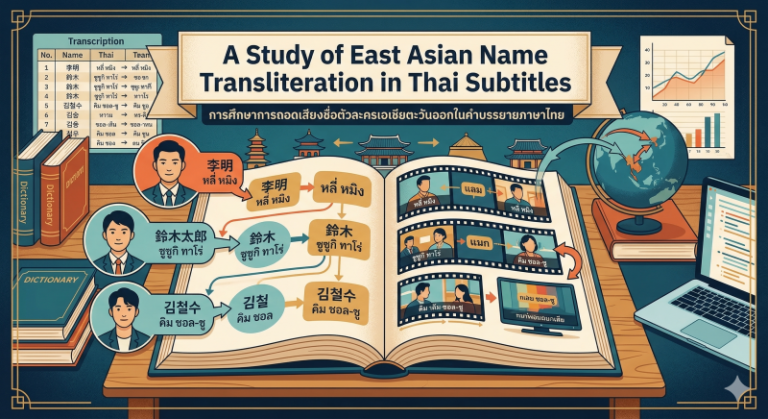
Transliteration of East Asian Personal Names in Thai Subtitling:
A Forensic Linguistic and Cognitive Processing Analysis
Abstract
This article aims to analyze the challenges of transliterating personal names from East Asian languages (Chinese, Japanese, and Korean) in Thai subtitle translation, with particular focus on spacing conventions and name order (given name–family name). These elements are often transferred based on Thai or English conventions, resulting in misalignment with the structural norms of the source languages. This study employs a forensic linguistics framework in conjunction with cognitive load theory and audiovisual translation (AVT) principles to explain the effects of different name-rendering strategies. The findings indicate that inserting spaces between name components in East Asian languages creates perceptual ambiguity and increases viewers’ cognitive processing load. In contrast, preserving original name structures and writing names as a single unit significantly enhances communicative efficiency. The article proposes practical guidelines for subtitle translators to improve professional standards and reduce semantic risk.
1. Introduction
Subtitle translation is a form of cross-linguistic and cross-cultural communication constrained by strict temporal and spatial limitations. Translators are required to make rapid and precise linguistic decisions, particularly when dealing with personal names, which are highly sensitive units in terms of identity and perception. However, in the Thai context, many translators continue to apply Thai spacing conventions between given names and family names, even when dealing with East Asian names that follow fundamentally different structural systems.
This issue is not merely a stylistic inconsistency but has significant implications for audience comprehension and overall translation quality. This article, therefore, examines this phenomenon through a theoretical lens to propose guidelines aligned with linguistic principles and professional standards.
2. Theoretical Framework
2.1 Forensic Linguistics and the Meaning of Linguistic Units
Forensic linguistics emphasizes the relationship between linguistic form and semantic effect, particularly in contexts where interpretation influences perception or decision-making. Spacing within personal names is therefore not merely a typographical convention but a structural mechanism that affects how linguistic units are interpreted.
2.2 Cognitive Load Theory
According to Sweller (1988), human information processing is constrained by the limited capacity of working memory. Presenting information in structurally ambiguous forms—such as segmenting a single name into multiple units—can impose unnecessary cognitive load, leading to slower processing and potential misunderstanding.
2.3 Audiovisual Translation (AVT)
Subtitle translation operates under constraints such as character limits per line and display duration (Díaz Cintas & Remael, 2007). Text formatting directly affects readability and viewer comprehension. Eliminating unnecessary elements, such as redundant spacing, is therefore a key principle in AVT practice.
3. Analysis of Spacing Issues in East Asian Names
3.1 Name Structures in Chinese, Japanese, and Korean
Personal names in East Asian languages typically consist of a monosyllabic family name followed by a one- or two-syllable given name. In their original writing systems (e.g., Chinese characters or Hangul), these names are not separated by spaces. When transliterated into Roman or Thai scripts, introducing spaces constitutes an artificial addition not present in the source language.
3.2 Effects of Spacing
Rendering a name such as “Zhao Lusi” as two separate units (e.g., “จ้าว ลูซื่อ”) rather than a single unit (“จ้าวลูซื่อ”) leads to its interpretation as two independent lexical items. This may result in:
- Entity recognition errors
- Increased cognitive processing load
- Inconsistency with international standards
Within the context of subtitling, these effects are amplified due to the limited time available for viewers to process on-screen text.
4. Name Order and the Influence of English Mediation
The use of English as an intermediary language in media production often leads to the reordering of East Asian names into a Western format (given name + family name). However, when translating into Thai, translators should consider reverting to the original structure (family name + given name) to preserve cultural authenticity.
Nevertheless, in the case of internationally recognized public figures whose names are widely used in Westernized order, translators may need to prioritize audience expectations alongside linguistic accuracy.
5. Transcription Principles and Professional Standards
Internationally recognized best practices include:
- Source-oriented transcription
- Preservation of original name structures
- Avoidance of English-mediated transliteration
These principles help maintain informational accuracy while minimizing the risk of distorting personal identity and meaning.
6. Discussion
Although spacing in personal names may appear to be a minor detail, this analysis demonstrates that it represents a structural intersection between language, cognition, and culture. Translators’ decisions in this regard have implications at both the micro level (readability) and macro level (professional standards).
From a forensic linguistic perspective, changes in textual form can lead to divergent interpretations, potentially affecting credibility in certain contexts. From an AVT perspective, improper formatting directly reduces communicative efficiency.
7. Conclusion
This study highlights that transliterating East Asian personal names in Thai subtitle translation is not merely a stylistic issue but a structural one involving linguistic, cognitive, and professional considerations. Writing names as a single unit without unnecessary spacing and preserving original name order enhances clarity, reduces cognitive load, and significantly improves translation quality.
References
- Díaz Cintas, J., & Remael, A. (2007). Audiovisual translation: Subtitling. Routledge.
- Sweller, J. (1988). Cognitive load during problem solving: Effects on learning. Cognitive Science, 12(2), 257–285.
- Nida, E. A. (1964). Toward a science of translating. Brill.
- House, J. (2015). Translation quality assessment: Past and present. Routledge.
About certified translators, translation certifiers, and certified interpreters associated with SEAProTI.
The Southeast Asian Association of Professional Translators and Interpreters (SEAProTI) has officially shared the qualifications and requirements for becoming Certified Translators, Translation Certification Providers, and Certified Interpreters in Sections 9 and 10 of the Royal Gazette, which was published by the Prime Minister’s Office in Thailand on July 25, 2024. Certified Translators, Translation Certification Providers, and Certified Interpreters
The Council of State has proposed the enactment of a Royal Decree, granting registered translators and recognised translation certifiers from professional associations or accredited language institutions the authority to provide legally valid translation certification (Letter to SEAProTI dated April 28, 2025)
SEAProTI is the first professional association in Thailand and Southeast Asia to implement a comprehensive certification system for translators, certifiers, and interpreters.
Head Office: Baan Ratchakru Building, No. 33, Room 402, Soi Phahonyothin 5, Phahonyothin Road, Phaya Thai District, Bangkok 10400, Thailand
Email: hello@seaproti.com | Tel.: (+66) 2-114-3128 (Office hours: Mon–Fri, 09:00–17:00).
การถอดชื่อบุคคลเอเชียตะวันออกในงานแปลซับไตเติล:
การวิเคราะห์เชิงนิติภาษาศาสตร์และการประมวลผลทางปัญญา
บทคัดย่อ
บทความนี้มีวัตถุประสงค์เพื่อวิเคราะห์ปัญหาการถอดชื่อบุคคลจากภาษาเอเชียตะวันออก (จีน ญี่ปุ่น และเกาหลี) ในงานแปลซับไตเติลภาษาไทย โดยมุ่งเน้นประเด็นการเว้นวรรคและลำดับชื่อ–นามสกุล ซึ่งมักถูกถ่ายทอดตามรูปแบบภาษาไทยหรือภาษาอังกฤษโดยไม่สอดคล้องกับโครงสร้างของภาษาต้นทาง การศึกษานี้ใช้กรอบแนวคิดนิติภาษาศาสตร์ (forensic linguistics) ร่วมกับทฤษฎีภาระทางปัญญา (cognitive load theory) และแนวคิดด้านการแปลโสตทัศน์ (audiovisual translation: AVT) เพื่ออธิบายผลกระทบของการเลือกใช้รูปแบบการเขียนชื่อที่แตกต่างกัน ผลการวิเคราะห์พบว่าการเว้นวรรคระหว่างชื่อและนามสกุลในภาษาเอเชียตะวันออกก่อให้เกิดความคลาดเคลื่อนในการรับรู้ (perceptual ambiguity) และเพิ่มภาระในการประมวลผลของผู้ชม ขณะที่การรักษาโครงสร้างชื่อเดิมและการเขียนติดกันช่วยเพิ่มประสิทธิภาพในการสื่อสารอย่างมีนัยสำคัญ บทความเสนอแนะแนวปฏิบัติสำหรับนักแปลซับไตเติลเพื่อยกระดับมาตรฐานวิชาชีพและลดความเสี่ยงเชิงความหมาย
1. บทนำ
การแปลซับไตเติลเป็นกระบวนการสื่อสารข้ามภาษาและวัฒนธรรมที่อยู่ภายใต้ข้อจำกัดด้านเวลาและพื้นที่อย่างเข้มงวด นักแปลจำเป็นต้องตัดสินใจเชิงภาษาศาสตร์อย่างรวดเร็วและแม่นยำ โดยเฉพาะในกรณีของ “ชื่อบุคคล” ซึ่งเป็นหน่วยภาษาที่มีความอ่อนไหวทั้งในเชิงอัตลักษณ์และการรับรู้ อย่างไรก็ตาม ในบริบทของภาษาไทย พบว่านักแปลจำนวนไม่น้อยยังคงใช้รูปแบบการเว้นวรรคระหว่างชื่อและนามสกุลตามแบบภาษาไทย แม้จะเป็นชื่อจากภาษาเอเชียตะวันออกที่มีโครงสร้างแตกต่างกันโดยสิ้นเชิง
ปัญหาดังกล่าวไม่ได้เป็นเพียงข้อผิดพลาดเชิงรูปแบบ แต่มีนัยสำคัญต่อความเข้าใจของผู้ชมและคุณภาพของงานแปลในภาพรวม บทความนี้จึงมุ่งวิเคราะห์ปรากฏการณ์ดังกล่าวผ่านกรอบวิชาการ เพื่อเสนอแนวทางที่สอดคล้องกับทั้งหลักภาษาศาสตร์และมาตรฐานวิชาชีพ
2. กรอบแนวคิดทางทฤษฎี
2.1 นิติภาษาศาสตร์และความหมายของหน่วยภาษา
นิติภาษาศาสตร์ให้ความสำคัญกับความสัมพันธ์ระหว่าง “รูปภาษา” (linguistic form) และ “ผลทางความหมาย” (semantic effect) โดยเฉพาะในบริบทที่การตีความมีผลต่อการรับรู้หรือการตัดสินใจ การเว้นวรรคในชื่อบุคคลจึงไม่ใช่เพียงเครื่องหมายทางไวยากรณ์ แต่เป็นกลไกที่ส่งผลต่อการตีความหน่วยภาษาในระดับโครงสร้าง
2.2 ทฤษฎีภาระทางปัญญา (Cognitive Load Theory)
ตามแนวคิดของ Sweller (1988) การประมวลผลข้อมูลของมนุษย์มีข้อจำกัดด้านความจำระยะสั้น (working memory) การนำเสนอข้อมูลที่มีโครงสร้างไม่ชัดเจน เช่น การแยกชื่อออกเป็นหลายหน่วยคำ อาจเพิ่มภาระทางปัญญาโดยไม่จำเป็น ส่งผลให้การรับรู้ช้าลงหรือเกิดความสับสน
2.3 การแปลโสตทัศน์ (Audiovisual Translation: AVT)
งานแปลซับไตเติลมีข้อจำกัดด้านจำนวนตัวอักษรต่อบรรทัดและระยะเวลาการแสดงผล (Díaz Cintas & Remael, 2007) การจัดรูปแบบข้อความจึงมีผลโดยตรงต่อความสามารถในการอ่านและความเข้าใจของผู้ชม การลดองค์ประกอบที่ไม่จำเป็น เช่น ช่องว่างส่วนเกิน จึงเป็นหลักการสำคัญใน AVT
3. การวิเคราะห์ปัญหาการเว้นวรรคในชื่อเอเชียตะวันออก
3.1 โครงสร้างชื่อในภาษาจีน ญี่ปุ่น และเกาหลี
ชื่อในภาษาเอเชียตะวันออกมักประกอบด้วยนามสกุลหนึ่งพยางค์และชื่อหนึ่งหรือสองพยางค์ โดยไม่มีการเว้นวรรคในระบบเขียนดั้งเดิม (เช่น อักษรจีนหรือฮันกึล) เมื่อถอดเป็นอักษรโรมันหรือภาษาไทย การเว้นวรรคจึงเป็น “การเพิ่มองค์ประกอบใหม่” ที่ไม่มีอยู่ในต้นฉบับ
3.2 ผลกระทบของการเว้นวรรค
การเขียน “จ้าว ลูซื่อ” แทน “จ้าวลูซื่อ” ทำให้ชื่อถูกตีความเป็นสองหน่วยคำอิสระ ซึ่งอาจก่อให้เกิด
- ความคลาดเคลื่อนในการระบุอัตลักษณ์ (entity recognition error)
- การเพิ่มภาระในการประมวลผลของผู้อ่าน
- ความไม่สอดคล้องกับมาตรฐานสากล
ในบริบทของซับไตเติล ผลกระทบดังกล่าวยิ่งทวีความสำคัญ เนื่องจากผู้ชมมีเวลาจำกัดในการอ่านข้อความ
4. ลำดับชื่อ–นามสกุลและการแทรกแซงของภาษาอังกฤษ
การใช้ภาษาอังกฤษเป็นภาษากลางในการผลิตสื่อส่งผลให้ลำดับชื่อ–นามสกุลของบุคคลเอเชียถูกปรับให้สอดคล้องกับโครงสร้างตะวันตก (given name + family name) อย่างไรก็ตาม การแปลเป็นภาษาไทยควรพิจารณาการ “คืนรูป” (reversion) ไปสู่โครงสร้างดั้งเดิม (family name + given name) เพื่อรักษาความถูกต้องทางวัฒนธรรม
ทั้งนี้ ในกรณีของบุคคลสาธารณะที่มีการใช้ชื่อในรูปแบบตะวันตกอย่างแพร่หลาย การตัดสินใจของนักแปลควรตั้งอยู่บนหลักการของ “การรับรู้ของผู้ชม” (audience expectation) ควบคู่กับความถูกต้องเชิงภาษาศาสตร์
5. หลักการถอดเสียงและมาตรฐานวิชาชีพ
แนวปฏิบัติที่ได้รับการยอมรับในระดับสากล ได้แก่
- การถอดเสียงตามภาษาต้นทาง (source-oriented transcription)
- การรักษาโครงสร้างชื่อเดิม
- การหลีกเลี่ยงการถอดผ่านภาษาอังกฤษ
หลักการดังกล่าวไม่เพียงช่วยรักษาความถูกต้องของข้อมูล แต่ยังลดความเสี่ยงในการบิดเบือนความหมายและอัตลักษณ์ของบุคคล
6. อภิปรายผล
การเว้นวรรคในชื่อบุคคลอาจดูเป็นรายละเอียดเล็กน้อย แต่จากการวิเคราะห์พบว่าเป็น “จุดตัดเชิงโครงสร้าง” ระหว่างภาษา การรับรู้ และวัฒนธรรม การตัดสินใจของนักแปลในประเด็นนี้จึงมีผลกระทบทั้งในระดับจุลภาค (micro-level readability) และมหภาค (macro-level professional standards)
ในเชิงนิติภาษาศาสตร์ การเปลี่ยนแปลงรูปแบบการเขียนสามารถนำไปสู่การตีความที่แตกต่าง ซึ่งในบางบริบทอาจส่งผลต่อความน่าเชื่อถือของข้อมูล ขณะที่ในเชิง AVT การจัดรูปแบบที่ไม่เหมาะสมส่งผลต่อประสิทธิภาพของการสื่อสารโดยตรง
7. บทสรุป
บทความนี้ชี้ให้เห็นว่าการถอดชื่อบุคคลจากภาษาเอเชียตะวันออกในงานแปลซับไตเติลไม่ใช่เพียงประเด็นด้านรูปแบบ แต่เป็นประเด็นเชิงโครงสร้างที่เกี่ยวข้องกับภาษาศาสตร์ การรับรู้ และมาตรฐานวิชาชีพ การเขียนชื่อโดยไม่เว้นวรรคและการรักษาลำดับชื่อ–นามสกุลตามวัฒนธรรมต้นทางช่วยเพิ่มความชัดเจน ลดภาระทางปัญญา และยกระดับคุณภาพของงานแปลอย่างมีนัยสำคัญ
เอกสารอ้างอิง
- Díaz Cintas, J., & Remael, A. (2007). Audiovisual translation: Subtitling. Routledge.
- Sweller, J. (1988). Cognitive load during problem solving: Effects on learning. Cognitive Science, 12(2), 257–285.
- Nida, E. A. (1964). Toward a science of translating. Brill.
- House, J. (2015). Translation quality assessment: Past and present. Routledge.
สมาคมวิชาชีพนักแปลและล่ามแห่งเอเชียตะวันออกเฉียงใต้ (SEAProTI) ได้ประกาศหลักเกณฑ์และคุณสมบัติของผู้ที่ขึ้นทะเบียนเป็น “นักแปลรับรอง (Certified Translators) และผู้รับรองการแปล (Translation Certification Providers) และล่ามรับรอง (Certified Interpreters)” ของสมาคม หมวดที่ 9 และหมวดที่ 10 ในราชกิจจานุเบกษา ของสำนักเลขาธิการคณะรัฐมนตรี ในสำนักนายกรัฐมนตรี แห่งราชอาณาจักรไทย ลงวันที่ 25 ก.ค. 2567 เล่มที่ 141 ตอนที่ 66 ง หน้า 100 อ่านฉบับเต็มได้ที่: นักแปลรับรอง ผู้รับรองการแปล และล่ามรับรอง
สำนักคณะกรรมการกฤษฎีกาเสนอให้ตราเป็นพระราชกฤษฎีกา โดยกำหนดให้นักแปลที่ขึ้นทะเบียน รวมถึงผู้รับรองการแปลจากสมาคมวิชาชีพหรือสถาบันสอนภาษาที่มีการอบรมและขึ้นทะเบียน สามารถรับรองคำแปลได้ (จดหมายถึงสมาคม SEAProTI ลงวันที่ 28 เม.ย. 2568)
สมาคมวิชาชีพนักแปลและล่ามแห่งเอเชียตะวันออกเฉียงใต้เป็นสมาคมวิชาชีพแห่งแรกและแห่งเดียวในประเทศไทยและภูมิภาคเอเชียตะวันออกเฉียงใต้ที่มีระบบรับรองนักแปลรับรอง ผู้รับรองการแปล และล่ามรับรอง
สำนักงานใหญ่: อาคารบ้านราชครู เลขที่ 33 ห้อง 402 ซอยพหลโยธิน 5 ถนนพหลโยธิน แขวงพญาไท เขตพญาไท กรุงเทพมหานคร 10400 ประเทศไทย
อีเมล: hello@seaproti.com โทรศัพท์: (+66) 2-114-3128 (เวลาทำการ: วันจันทร์–วันศุกร์ เวลา 09.00–17.00 น.