


Technology of Translation, Artificial Intelligence, and the Endurance of the Translation Profession:
A Historical Analysis of Professional Standards and Human Accountability
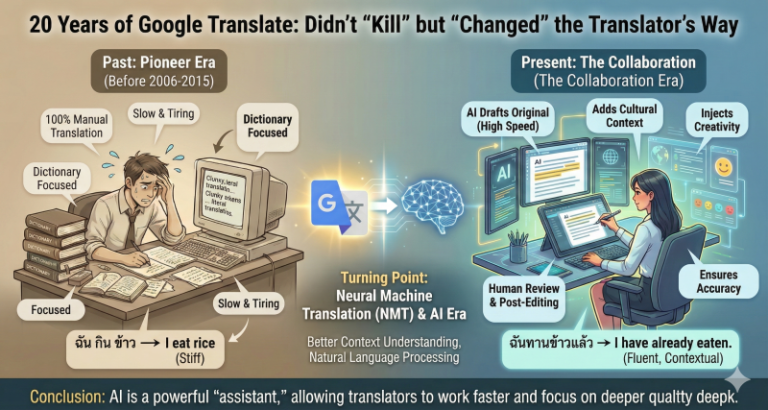
3 January 2025, Bangkok—The 20th anniversary of Google Translate in 2026 provides an appropriate moment to re-examine the recurring discourse that views translation technology and artificial intelligence (AI) as forces destined to replace human translators and bring language service industries to an end. This article aims to analyse this phenomenon from a historical perspective, comparing it with early machine translation efforts in the mid-twentieth century, and to discuss the structural impact of AI on the translation profession. It argues that technology has not eliminated the profession of translation; rather, it has transformed the nature of translators’ work, while humans continue to play a central role in professional judgment, accountability, and contextual expertise.
Since the launch of Google Translate in 2006, automated translation technologies have been widely predicted to reduce—or even eliminate—the demand for human translators. However, two decades later, the translation industry continues to expand, particularly in high-risk domains such as law, medicine, and diplomacy. This development highlights the gap between technological capability and the level of professional responsibility that must ultimately be borne by human practitioners.
Machine Translation in Historical Context
The concept of using machines to translate language is not a product of the contemporary digital era. It can be traced back to 1954, when IBM, in collaboration with researchers from Georgetown University, demonstrated the first computer-based translation of Russian sentences into English. Although the experiment was limited to approximately 250 vocabulary items and six grammatical rules, it attracted widespread media attention and led to speculation that human translators would soon become obsolete.
These expectations, however, proved unfounded. Over more than seventy years of development, machine translation research has consistently shown that language is far too complex to be reduced to simple word substitution or purely statistical pattern matching (Hutchins, 2007).
Google Translate and the Evolution of Automated Translation
Google Translate has significantly reshaped the landscape of language access by enabling cross-linguistic communication in everyday contexts. Nevertheless, a substantial body of research demonstrates that even advanced neural machine translation systems lack the capacity to assess legal, cultural, and ethical contexts adequately (Koehn, 2020).
In practice, such technologies are increasingly used as assistive tools rather than as replacements for professional translators—particularly in domains where accountability for translation outcomes is essential.
Artificial Intelligence and the Structure of the Translation Profession
Debates surrounding AI and translation closely resemble discussions in other professional fields such as law, insurance, and healthcare. In these domains, AI can reduce repetitive tasks and improve efficiency, yet it cannot assume responsibility for legal or ethical consequences (Susskind, 2019).
Within the translation context, responsibility for communication failures remains with humans, not algorithms. Consequently, the translator’s role has not disappeared but has shifted from that of a mere “text converter” to that of an evaluator, reviewer, and guarantor of meaning.
Judgment, Accountability, and Expertise: What Technology Cannot Replace
At the core of the translation profession lies not speed or volume, but professional judgment and deep contextual understanding. Translators are accountable for outcomes that may affect rights, obligations, and even human lives—dimensions of responsibility that technology cannot assume (Pym, 2014).
Conclusion
The history of machine translation from 1954 to the present clearly demonstrates that technology has not eliminated the translation profession. Instead, it has reshaped professional roles and heightened the importance of human expertise. In the era of artificial intelligence, translators are not competing with machines but working alongside them, with humans remaining ultimately responsible for accuracy, meaning, and the broader consequences of cross-linguistic communication.
References
- Hutchins, J. (2007). Machine translation: A concise history. Computer Science Department, University of Essex.
- Koehn, P. (2020). Neural machine translation. Cambridge University Press. https://doi.org/10.1017/9781108609702
- Pym, A. (2014). Exploring translation theories (2nd ed.). Routledge.
- Susskind, R. (2019). Online courts and the future of justice. Oxford University Press.
About Certified Translators, Translation Certifiers, and Certified Interpreters of SEAProTI
The Southeast Asian Association of Professional Translators and Interpreters (SEAProTI) has formally announced the qualifications and requirements for registration of Certified Translators, Translation Certification Providers, and Certified Interpreters in Sections 9 and 10 of the Royal Gazette, published by the Secretariat of the Cabinet, Office of the Prime Minister of Thailand, on 25 July 2024 (Vol. 141, Part 66 Ng, p. 100). Certified Translators, Translation Certification Providers, and Certified Interpreters
The Council of State has proposed the enactment of a Royal Decree, granting registered translators and recognised translation certifiers from professional associations or accredited language institutions the authority to provide legally valid translation certification (Letter to SEAProTI dated April 28, 2025)
SEAProTI is the first professional association in Thailand and Southeast Asia to implement a comprehensive certification system for translators, certifiers, and interpreters.
Head Office: Baan Ratchakru Building, No. 33, Room 402, Soi Phahonyothin 5, Phahonyothin Road, Phaya Thai District, Bangkok 10400, Thailand
Email: hello@seaproti.com | Tel.: (+66) 2-114-3128 (Office hours: Mon–Fri, 09:00–17:00)
เทคโนโลยีการแปล ปัญญาประดิษฐ์ และความคงอยู่ของวิชาชีพนักแปล: บทวิเคราะห์เชิงประวัติศาสตร์ มาตรฐานวิชาชีพ และความรับผิดชอบของมนุษย์
3 มกราคม 2568, กรุงเทพมหานคร – การครบรอบ 20 ปีของ Google Translate ในปี พ.ศ. 2569 เป็นจุดเหมาะสมในการทบทวนวาทกรรมซ้ำซากที่มองว่าเทคโนโลยีการแปลและปัญญาประดิษฐ์ (Artificial Intelligence: AI) จะเข้ามาแทนที่นักแปลมนุษย์และทำให้ธุรกิจบริการด้านภาษาสิ้นสุดลง บทความนี้มีวัตถุประสงค์เพื่อวิเคราะห์ปรากฏการณ์ดังกล่าวในเชิงประวัติศาสตร์ เปรียบเทียบกับความพยายามด้านการแปลด้วยเครื่องในช่วงกลางศตวรรษที่ 20 และอภิปรายผลกระทบของ AI ต่อวิชาชีพการแปลในเชิงโครงสร้าง บทความเสนอว่า เทคโนโลยีมิได้ทำให้วิชาชีพนักแปลสูญหาย หากแต่ปรับเปลี่ยนลักษณะของงาน โดยมนุษย์ยังคงมีบทบาทหลักในด้านการใช้ดุลยพินิจ ความรับผิดชอบ และความเชี่ยวชาญเชิงบริบท
ตั้งแต่การเปิดตัวของ Google Translate เมื่อปี ค.ศ. 2006 เทคโนโลยีการแปลอัตโนมัติได้ถูกคาดการณ์อย่างกว้างขวางว่าจะทำให้ความต้องการนักแปลมนุษย์ลดลงหรือหมดไป อย่างไรก็ตาม หลังจากผ่านไปสองทศวรรษ อุตสาหกรรมการแปลกลับยังคงขยายตัวอย่างต่อเนื่อง โดยเฉพาะในสาขาที่มีความเสี่ยงสูง เช่น กฎหมาย การแพทย์ และการทูต ปรากฏการณ์นี้สะท้อนให้เห็นช่องว่างระหว่างความสามารถของเทคโนโลยีกับความรับผิดชอบทางวิชาชีพที่มนุษย์ต้องแบกรับ
ความพยายามด้านการแปลด้วยเครื่องในบริบทประวัติศาสตร์
แนวคิดเรื่องการใช้เครื่องจักรแปลภาษาไม่ได้เป็นผลผลิตของยุคดิจิทัลสมัยใหม่ หากแต่สามารถย้อนกลับไปถึงปี ค.ศ. 1954 เมื่อ IBM ร่วมกับนักวิจัยจาก Georgetown University สาธิตการแปลประโยคภาษารัสเซียเป็นภาษาอังกฤษด้วยคอมพิวเตอร์เป็นครั้งแรก แม้การทดลองดังกล่าวจะจำกัดอยู่เพียงคำศัพท์ประมาณ 250 คำและกฎไวยากรณ์ 6 ข้อ แต่กลับได้รับความสนใจจากสื่ออย่างล้นหลาม และก่อให้เกิดการคาดการณ์ว่านักแปลมนุษย์จะหมดบทบาทในอนาคตอันใกล้
อย่างไรก็ตาม ความคาดหวังดังกล่าวไม่สอดคล้องกับความเป็นจริง การพัฒนาเทคโนโลยีการแปลตลอดกว่า 70 ปีที่ผ่านมาแสดงให้เห็นว่า ภาษาเป็นระบบที่ซับซ้อนเกินกว่าจะถูกลดทอนเป็นเพียงการจับคู่คำหรือรูปแบบเชิงสถิติ (Hutchins, 2007)
Google Translate และวิวัฒนาการของการแปลอัตโนมัติ
Google Translate ได้เปลี่ยนภูมิทัศน์ของการเข้าถึงภาษาอย่างมีนัยสำคัญ โดยทำให้การสื่อสารข้ามภาษาเป็นไปได้ในชีวิตประจำวัน อย่างไรก็ตาม งานวิจัยจำนวนมากชี้ให้เห็นว่า แม้ระบบ Neural Machine Translation จะมีความแม่นยำเพิ่มขึ้น แต่ก็ยังขาดความสามารถในการประเมินบริบททางกฎหมาย วัฒนธรรม และผลกระทบเชิงจริยธรรมของข้อความ (Koehn, 2020)
ในทางปฏิบัติ เทคโนโลยีดังกล่าวกลับถูกนำมาใช้เป็น “เครื่องมือสนับสนุน” (assistive technology) มากกว่าการทดแทนผู้เชี่ยวชาญ โดยเฉพาะในงานที่ต้องการความรับผิดชอบต่อผลลัพธ์ของการแปล
ปัญญาประดิษฐ์กับโครงสร้างของวิชาชีพการแปล
การถกเถียงเรื่อง AI กับการแปลมีลักษณะคล้ายกับการถกเถียงในสาขาอื่น เช่น กฎหมาย ประกันภัย และการแพทย์ กล่าวคือ AI สามารถลดภาระงานซ้ำ ๆ และเพิ่มประสิทธิภาพของกระบวนการทำงาน แต่ไม่สามารถรับผิดชอบต่อผลทางกฎหมายหรือจริยธรรมได้ (Susskind, 2019)
ในบริบทของการแปล ความรับผิดชอบต่อความผิดพลาดในการสื่อสารยังคงตกอยู่กับมนุษย์ ไม่ใช่อัลกอริทึม ดังนั้น บทบาทของนักแปลจึงมิได้หายไป หากแต่เปลี่ยนจาก “ผู้ถอดความ” ไปสู่ “ผู้ประเมิน ตรวจสอบ และรับรองความหมาย”
การตัดสินใจ ความรับผิด และความเชี่ยวชาญ: สิ่งที่เทคโนโลยีแทนไม่ได้
หัวใจของวิชาชีพการแปลไม่ได้อยู่ที่ความเร็วหรือปริมาณ หากแต่อยู่ที่การใช้ดุลยพินิจ (professional judgment) และความเข้าใจเชิงลึกต่อบริบท ผู้แปลต้องรับผิดชอบต่อผลลัพธ์ของข้อความที่อาจส่งผลกระทบต่อสิทธิ หน้าที่ และชีวิตของผู้อื่น ซึ่งเป็นมิติที่เทคโนโลยีไม่สามารถแบกรับแทนมนุษย์ได้ (Pym, 2014)
บทสรุป
ประวัติศาสตร์ของการแปลด้วยเครื่องตั้งแต่ปี ค.ศ. 1954 จนถึงปัจจุบันชี้ชัดว่า เทคโนโลยีไม่ได้ทำให้วิชาชีพนักแปลสูญหาย หากแต่เปลี่ยนบทบาทและเพิ่มความสำคัญของความเชี่ยวชาญเชิงมนุษย์ ในยุคของปัญญาประดิษฐ์ นักแปลจึงไม่ได้แข่งขันกับเครื่องจักร หากแต่ทำงานร่วมกับมัน โดยมนุษย์ยังคงเป็นผู้รับผิดชอบต่อความถูกต้อง ความหมาย และผลกระทบของการสื่อสารข้ามภาษา
Koehn, P. (2020). Neural machine translation. Cambridge University Press. https://doi.org/10.1017/9781108609702
Pym, A. (2014). Exploring translation theories (2nd ed.). Routledge.
Susskind, R. (2019). Online courts and the future of justice. Oxford University Press.
สมาคมวิชาชีพนักแปลและล่ามแห่งเอเชียตะวันออกเฉียงใต้ (SEAProTI) ได้ประกาศหลักเกณฑ์และคุณสมบัติผู้ที่ขึ้นทะเบียนเป็น “นักแปลรับรอง (Certified Translators) และผู้รับรองการแปล (Translation Certification Providers) และล่ามรับรอง (Certified Interpreters)” ของสมาคม หมวดที่ 9 และหมวดที่ 10 ในราชกิจจานุเบกษา ของสำนักเลขาธิการคณะรัฐมนตรี ในสำนักนายกรัฐมนตรี แห่งราชอาณาจักรไทย ลงวันที่ 25 ก.ค. 2567 เล่มที่ 141 ตอนที่ 66 ง หน้า 100 อ่านฉบับเต็มได้ที่: นักแปลรับรอง ผู้รับรองการแปล และล่ามรับรอง
สำนักคณะกรรมการกฤษฎีกา เสนอให้ตราเป็นพระราชกฤษฎีกา โดยกำหนดให้นักแปลที่ขึ้นทะเบียน รวมถึงผู้รับรองการแปลจากสมาคมวิชาชีพหรือสถาบันสอนภาษาที่มีการอบรมและขึ้นทะเบียน สามารถรับรองคำแปลได้ (จดหมายถึงสมาคม SEAProTI ลงวันที่ 28 เม.ย. 2568)
สมาคมวิชาชีพนักแปลและล่ามแห่งเอเชียตะวันออกเฉียงใต้ เป็นสมาคมวิชาชีพแห่งแรกและแห่งเดียวในประเทศไทยและภูมิภาคเอเชียตะวันออกเฉียงใต้ที่มีระบบรับรองนักแปลรับรอง ผู้รับรองการแปล และล่ามรับรอง
สำนักงานใหญ่: อาคารบ้านราชครู เลขที่ 33 ห้อง 402 ซอยพหลโยธิน 5 ถนนพหลโยธิน แขวงพญาไท เขตพญาไท กรุงเทพมหานคร 10400 ประเทศไทย
อีเมล: hello@seaproti.com โทรศัพท์: (+66) 2-114-3128 (เวลาทำการ: วันจันทร์–วันศุกร์ เวลา 09.00–17.00 น.